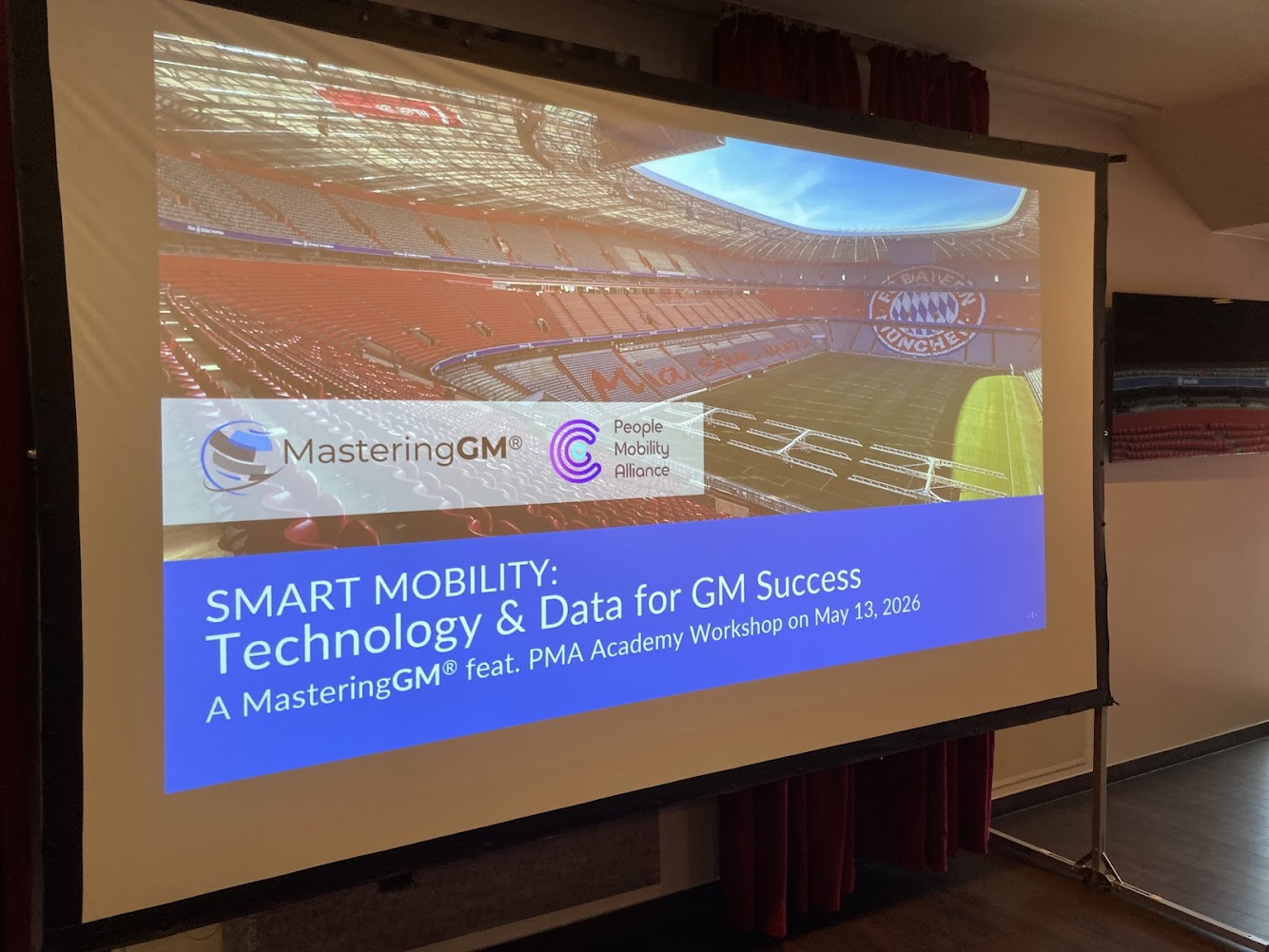
What happens when GM leaders step out of the meeting room — and into the Allianz Arena?
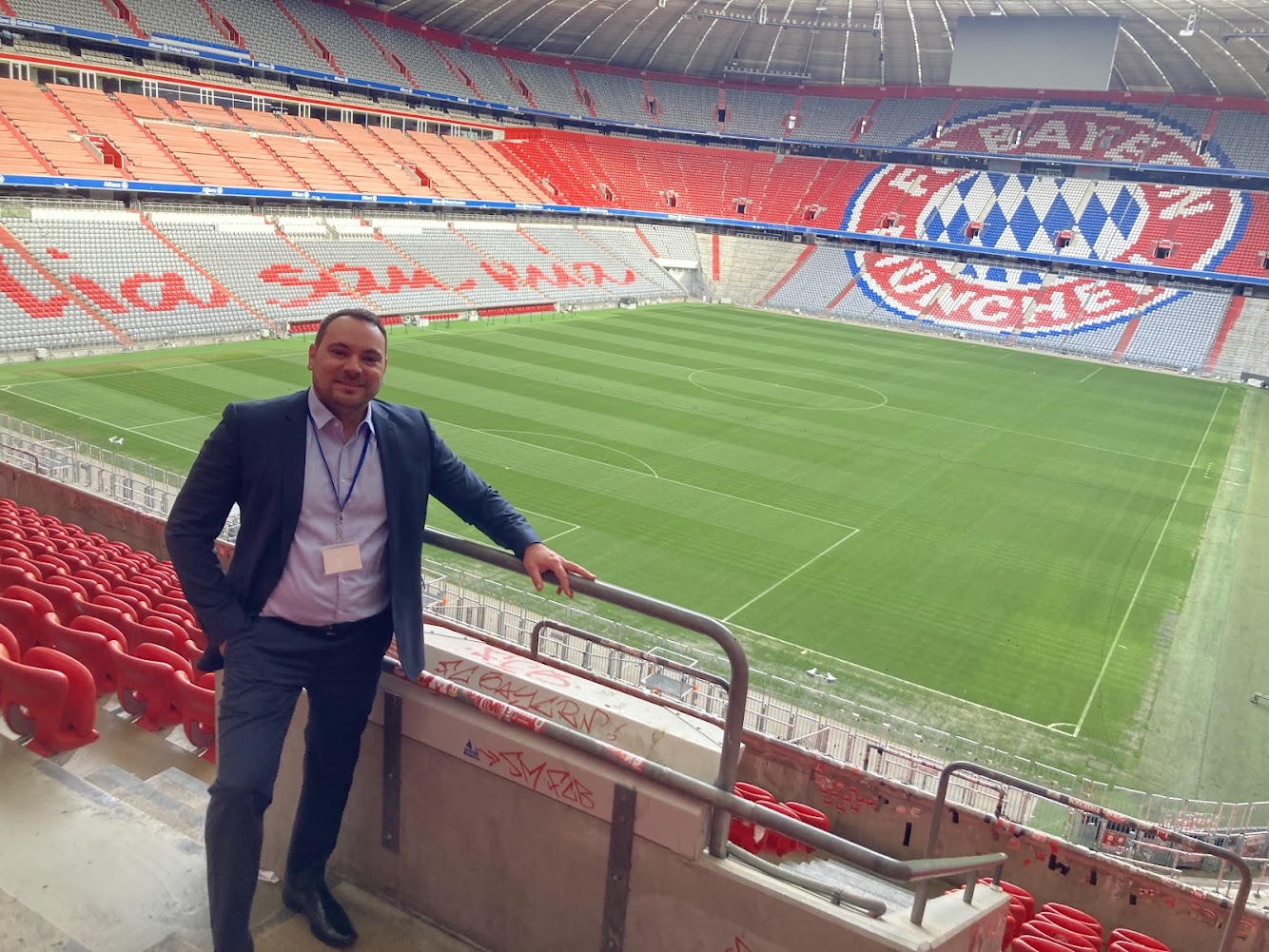
There is a moment, when you step onto the pitch level of the Allianz Arena, where the scale of the place rearranges your sense of proportion. Seventy-five thousand seats. A stadium that glows red or blue depending on who plays at home. A space designed to make what happens at the centre feel significant.
It was, in short, the perfect venue to ask a hard question: does Global Mobility belong at the centre — or is it still waiting on the sidelines?
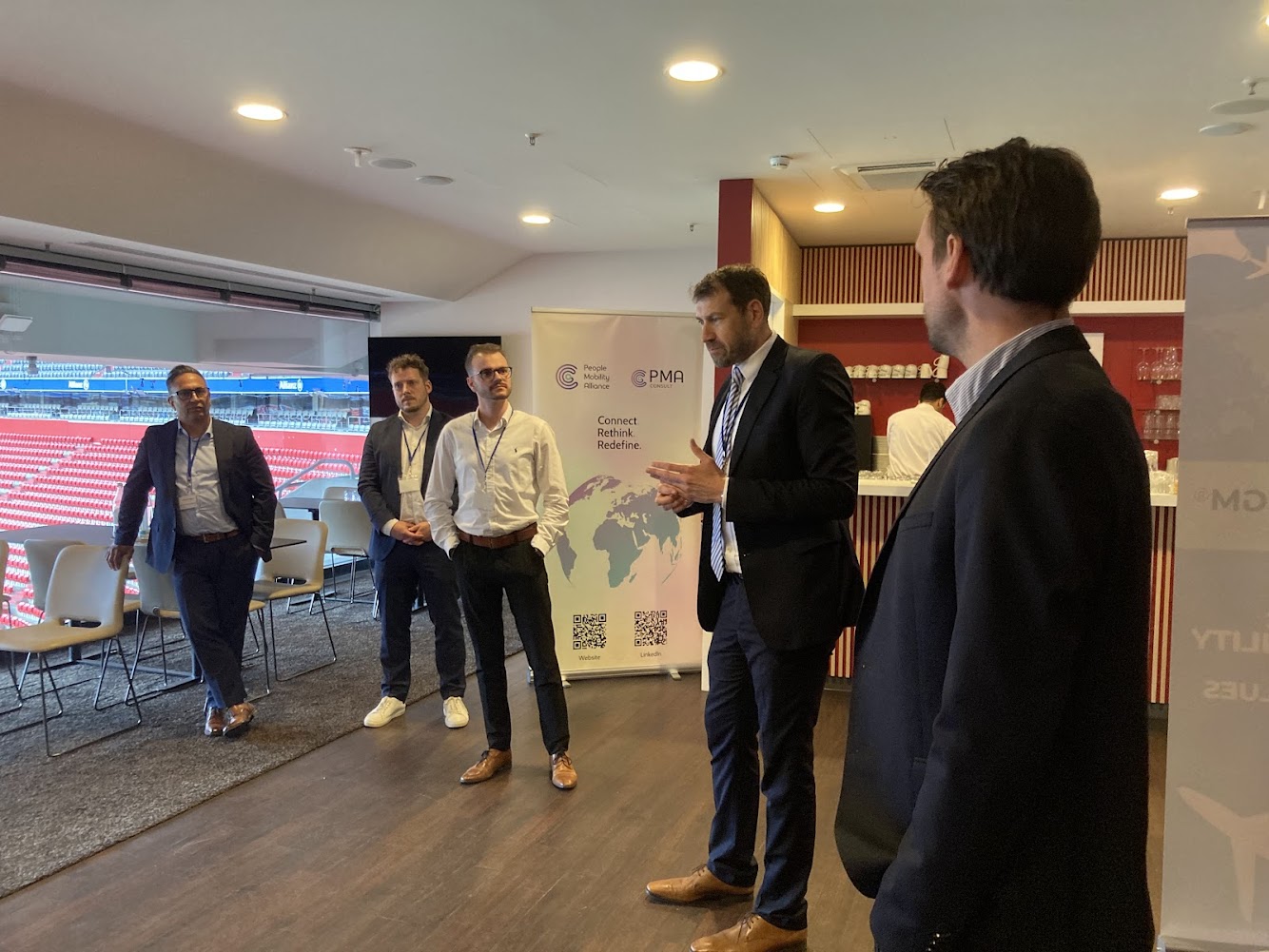
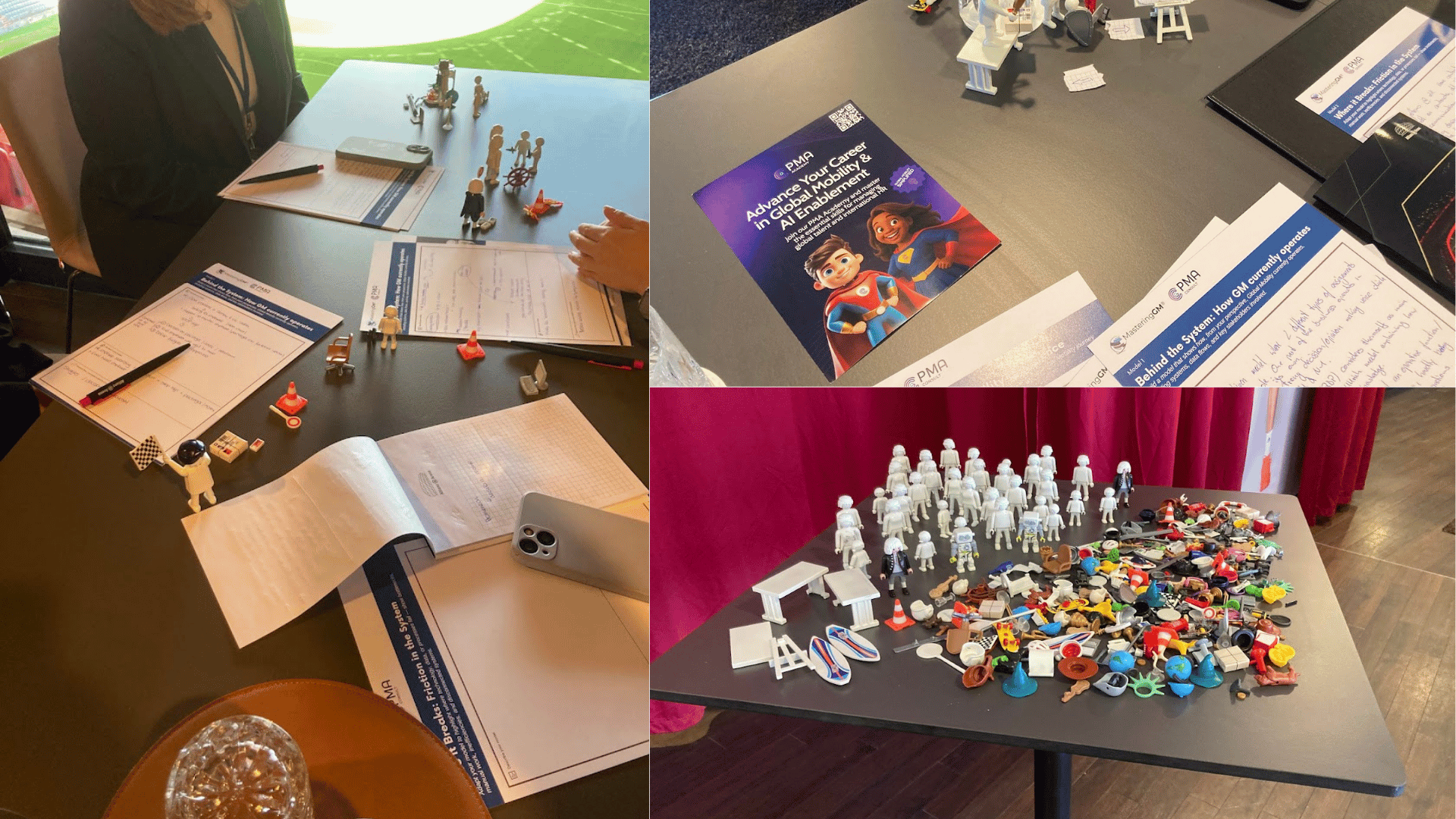
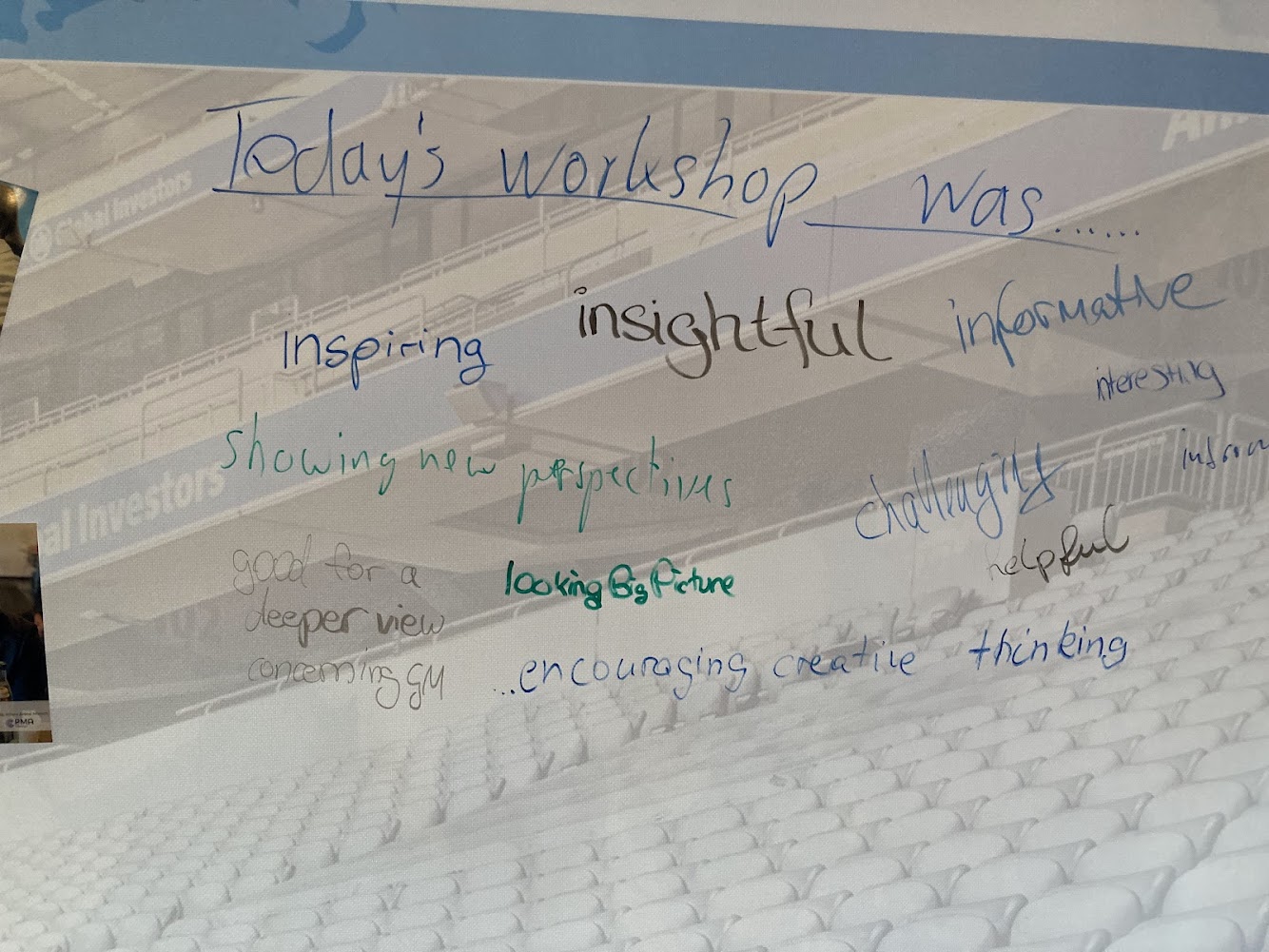
On a recent afternoon in Munich, a group of senior Global Mobility leaders gathered at the Allianz Arena for the latest PMA Academy Global Mobility Leader workshop, co-hosted with MasteringGM. What followed was a day of unusually honest conversation about where the function stands — and what it needs to become.
The Referee Problem
The quote that defined the day came early.
“GM is like a referee in a soccer game — if no one talks about him, he does the right job.”
It landed with a kind of rueful recognition. Anyone who has worked in Global Mobility for more than a few years knows this feeling intimately: the seamless assignment that nobody noticed, the compliance issue quietly resolved before it reached HR, the cross-border move that came in on time and under budget — and was immediately forgotten.
Silent execution is, in many organisations, the operating ideal. But it comes at a cost. If Global Mobility only surfaces when something goes wrong, it will always be perceived as a risk function rather than a value function. And risk functions do not get invited to the strategic table.
The question the group wrestled with throughout the day was not whether GM professionals are doing the right job. Most clearly are. The question is whether the function can prove that silent, seamless execution represents strategic value — and whether its metrics are built to make that case.
Six Questions Shaping the Profession
The agenda was structured around the core tensions currently shaping Global Mobility in organisations of every size and sector. Six themes emerged from the room — not as abstract concepts, but as the lived, operational reality of professionals navigating a function in transition.
-
Increasing Visibility Within the Organisation
Global Mobility often operates below the radar of the wider HR function and business leadership. Increasing visibility is not a communications task — it is a positioning task. It requires GM to be present in the conversations where talent decisions are being made, not just informed of them afterward.
-
Moving Beyond Spreadsheets
The platform question is no longer theoretical. Organisations that rely on manual processes and disconnected data sources are not just inefficient — they are flying blind. Smart platform use is not about technology for its own sake; it is about creating the data infrastructure that makes strategic decision-making possible.
-
Getting HR and GM Onto the Same Level
The relationship between Global Mobility and the broader HR function is often characterised by mutual misunderstanding. HR sees GM as complex, specialist, and transactional. GM sees HR as focused on the domestic workforce and insufficiently attentive to the specific dynamics of cross-border talent. Bridging that gap requires shared language, shared metrics, and a shared understanding of what each function is actually trying to achieve.
-
Data Alignment Across Functions
Data that lives in silos cannot support enterprise-wide decisions. When finance, HR, legal, and Global Mobility each hold a different version of the same workforce reality, the result is not just inefficiency — it is strategic paralysis. Aligning data across functions is a prerequisite for GM to operate as a genuine business partner.
-
Positioning GM as a One-Stop-Shop for Employees
The employee experience of mobility is still, in many organisations, fragmented across multiple providers, processes, and points of contact. A GM function that positions itself as the single, trusted interface for the employee — from initial conversation through assignment completion — builds loyalty, trust, and a far stronger case for its own value.
-
Speaking the Language of the CFO and CEO
This was perhaps the most urgent theme of the day. GM leaders are often highly fluent in the language of mobility — policy frameworks, assignment structures, tax implications, vendor management. What they are less consistently fluent in is the language of the executive floor. Speaking to a CFO requires translating operational excellence into financial terms: cost avoidance, risk mitigation, talent retention, time-to-productivity. The metrics that matter to GM are not always the metrics that move decisions at the top.
Strategy Is Not a Destination — It Is a Posture
A recurring theme across the day was the distinction between GM as a function that supports strategy and GM as a function that is strategic. The difference is not semantic.
A support function executes decisions made elsewhere. A strategic function shapes decisions — because it holds data and insight that no other function has. Global Mobility sits at the intersection of talent, compliance, finance, and operations. No other function sees the full picture of how an organisation deploys its people across borders.
The challenge is that most GM functions have been built for execution, not for influence. The processes, the metrics, the reporting lines, the internal communications — all of it is optimised for getting the work done, not for making the work visible.
What the Munich group explored, with a frankness that the stadium setting seemed to encourage, was how to shift that posture. Not by doing less. By doing more of what already works — and making sure the organisation knows it.
A Venue That Asked Something of the Day
It would be easy to dismiss the choice of venue as a flourish. A stadium is dramatic. It makes for a good photograph.
But the Allianz Arena earned its place in the agenda. A world-class sporting venue is a machine for turning performance into visibility. Every metric matters. Every result is tracked, analysed, and reported. The best players are not just talented — they are legible. Their contribution is understood.
That is the standard Global Mobility is increasingly being asked to meet. Not just to perform — but to be understood. To make the invisible visible. To turn operational excellence into a story that the CFO can tell at the board, and that a talent partner can carry into a conversation with a business leader considering a critical cross-border move.
The referee who does the right job deserves to be known for it. The question is whether Global Mobility is ready to build the metrics that tell that story — and whether it has the confidence to tell it.
The group in Munich, at the end of a long and unusually candid day, seemed to believe it does.
Thank You to Our Partners
The Munich workshop would not have been possible without the outstanding support of our three partners — WorkFlex, Die Techniker, and Crown World Mobility — whose engagement and collaboration made the day what it was. Your investment in the Global Mobility community and in the development of its leaders is genuinely appreciated.
PMA Academy: Global Mobility Leader
This workshop is part of the PMA Academy: Global Mobility Leader programme — the development journey for GM professionals who are ready to build strategic influence, communicate value with confidence, and lead their function into a different league.
Check our Global Mobility courses
Author:

Stefan Remhof is Managing Partner of the People Mobility Alliance and Professor of International Management at IU International University. He possesses extensive expertise in global mobility, expat management, and international assignments.