How do Global Mobility leaders move from administrative execution to strategic architecture?
On 25 March 2026, ten senior Global Mobility leaders gathered in Hamburg for a workshop that was anything but conventional. Part of the PMA Academy: Global Mobility Leader programme, the day challenged assumptions, built a shared language for the future of mobility, and — most importantly — sent participants home with tools they can use on Monday morning.
A City Built on Transitions
There is something fitting about Hamburg as a setting. A city defined by its harbour — by the movement of goods, ideas, and people across borders — it is a living metaphor for what Global Mobility has always been, and what it must increasingly become: a strategic orchestrator of how organizations connect with the world.
Under the banner of Harbors of the Future, facilitated by Professor Benjamin Bader and Professor Stefan Remhof, the day was structured as a guided exploration rather than a lecture series. The aim was not to deliver answers, but to surface the right questions — and equip participants to answer them with confidence back in their own organisations.
“Mobility isn’t about people moving. It’s about organizations moving forward — and GM is the function that makes that possible.”
Session insight, Exploring New Mobility Models

The New Reality of Global Mobility
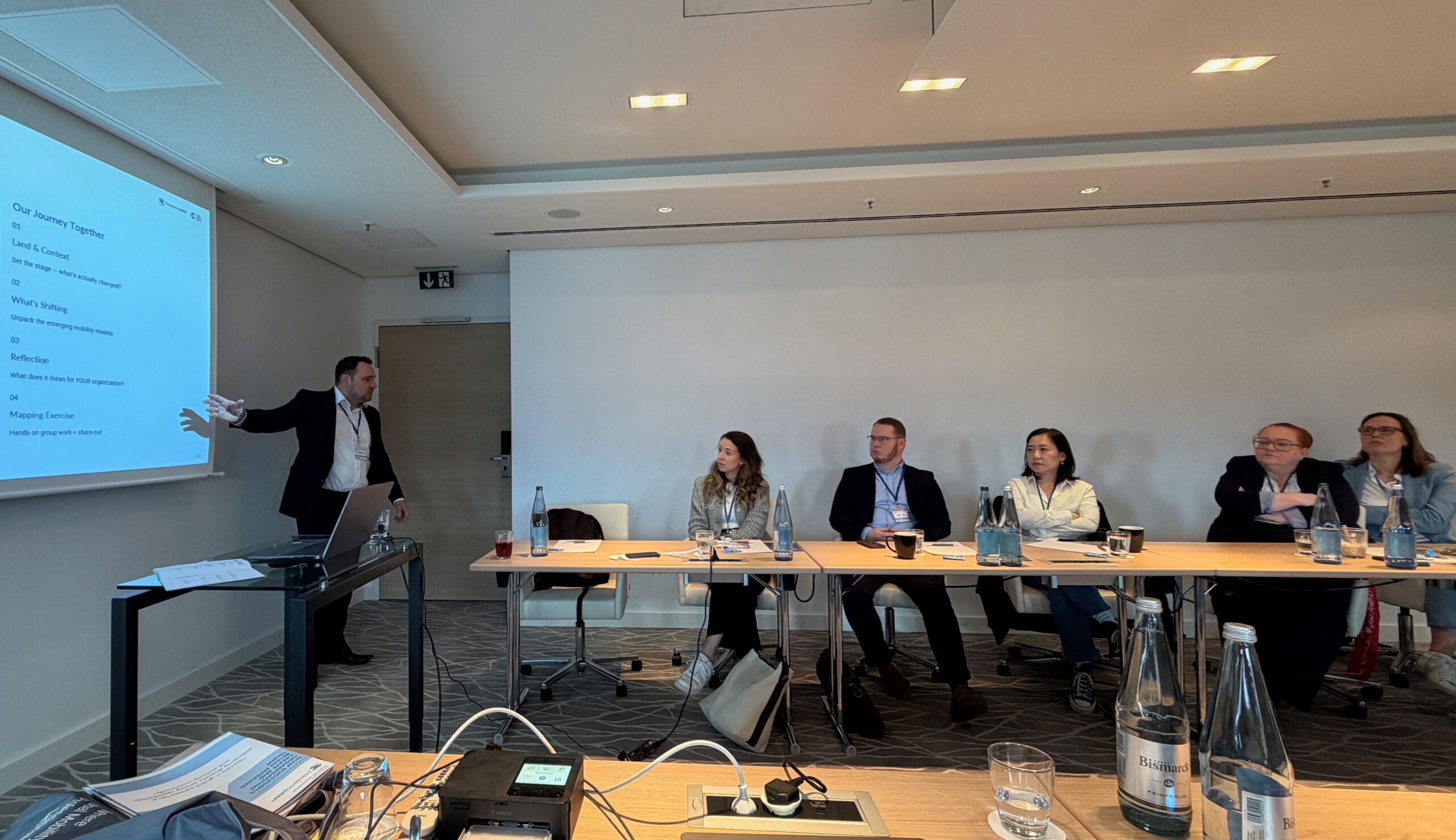
Stefan Remhof, Managing Partner of the People Mobility Alliance, opened with a provocation that resonated across the room: “How many three-year expat assignments does your company still run?” The question landed differently depending on who was asked — but the direction of travel was unmistakable. The traditional, single-model approach to mobility has fractured into a wide and complex spectrum.
Today’s organisations simultaneously manage long-term expatriate assignments, hybrid hub-and-spoke arrangements, short-term project postings, intra-regional rotations, remote-with-flex-relocation setups, and entirely virtual cross-border teams — often without a unified policy framework holding it all together. Modern mobility is a portfolio. The challenge is not choosing one model; it is managing all of them, strategically and at scale.
“GM is no longer about relocation — it’s about orchestrating talent mobility across multiple dimensions.”
Session insight, Exploring New Mobility Models
What the Room Said: Insights from the Corporate Cohort
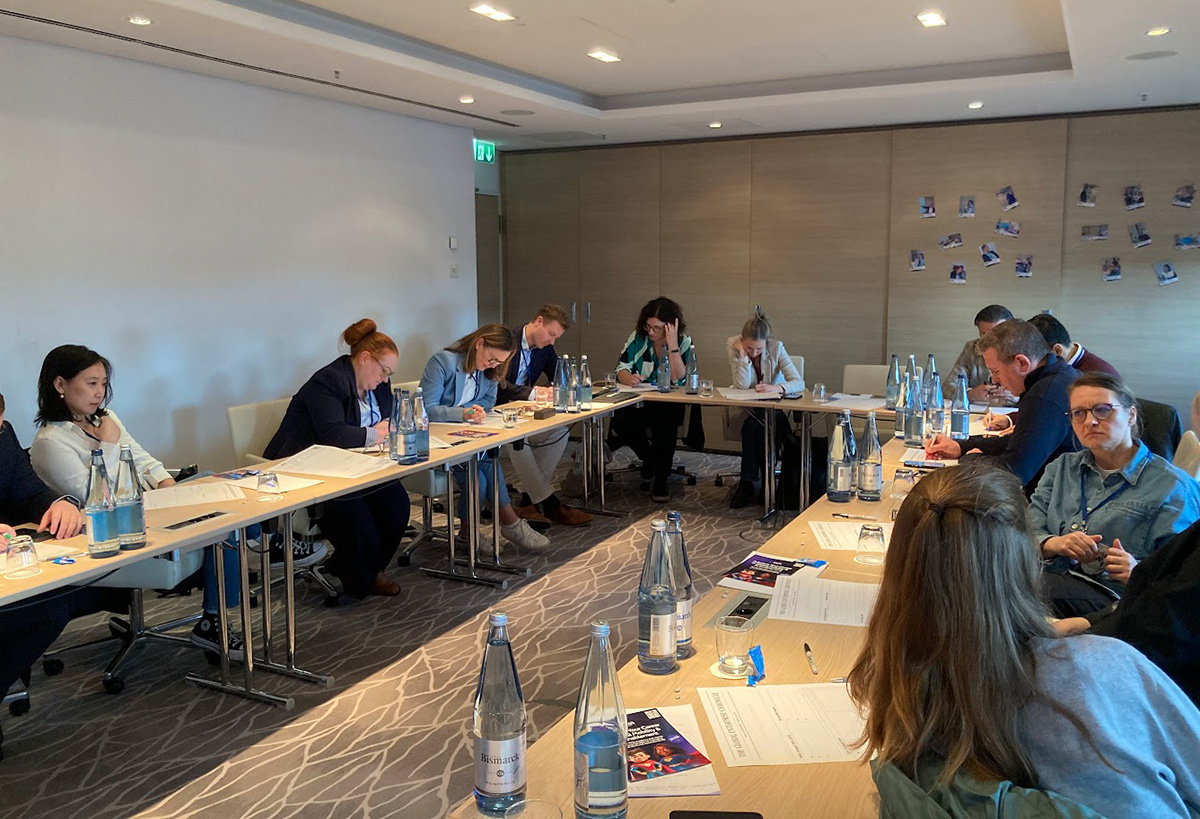
The ten corporate participants brought genuine experience — and genuine complexity — into the room. Through facilitated discussion and group exercises, six clear themes emerged. These were not theoretical conclusions; they were the lived reality of professionals navigating Global Mobility in 2026.
1. Global Mobility is a Business Enabler at Scale
Global Mobility is not a support function — it is a business enabler with measurable impact on growth, competitiveness, and organizational resilience.
2. GM Has to Demonstrate Its Impact
GM must make its contribution visible — in numbers, in stories, and in the language that resonates with senior leadership and finance.
3. Make Sure the Narratives Travel
The case for GM value must be so clearly articulated that stakeholders can — and want to — carry those messages forward on GM’s behalf.
4. Data-Driven Decisions
Demonstrating value requires reliable data — and the capability to translate that data into decision-ready insights for leadership. Fragmented data remains one of the most pressing challenges in the profession.
5. Streamline Expectations: Business Needs vs. Expat Expectations
Closing the gap between business requirements and expatriate expectations remains one of the most important — and underappreciated — leadership tasks in GM.
6. Define Clear Ownership: End-to-End Process
Fragmented data and unclear process ownership erode credibility. End-to-end accountability is not optional — it is the foundation of a high-performing GM function.
The Data-to-Story Sprint: Turning Complexity Into Influence
One of the day’s most impactful sessions was the Data-to-Story Sprint — a fast-paced, hands-on exercise in which participants transformed real mobility data into compelling value narratives for senior stakeholders. The premise was simple but powerful: the problem is rarely a lack of data. It is a lack of narrative.
The session introduced a replicable three-part framework — structured around Context, Data, and Insight — that works across any mobility scenario, any audience, and any business context.
The Framework: Context → Data → Insight
- Context — Why this matters now: What external driver changed? What role did GM play in responding?
- Data — Translate into impact: Which hard metric shifted? Time, cost, retention, risk, or speed — and what does that mean for the business?
- Insight — Why it matters going forward: What is the strategic implication? What competitive advantage did GM unlock — and what should leadership do next?
From Relocation Manager to Mobility Architect
A recurring theme across the day — in the opening session, in group reflections, and in the closing remarks — was the evolution of the GM professional’s identity. The role is undergoing a fundamental transformation: from one defined by administrative execution to one defined by strategic design.
From Relocation Manager — processing moves, managing packages, ensuring compliance — to Mobility Architect: designing talent mobility strategies across a full spectrum of models, geographies, and career stages. This is not a future aspiration. For the professionals in the room, it is already the expectation they are navigating every day.
The question is no longer whether new mobility models will reshape the profession. They already have. The question is whether GM will lead that transformation — or be led by it.
How Participants Described the Day
At the close of the workshop, participants were invited to put a word to their experience. Eight attributes emerged — a collective voice from the room that speaks louder than any formal evaluation:
Inspiring · Insightful · Engaging · Structuring · Informative · Creative · Helpful · Different
Thank You to Our Partners
The workshop would not have been possible without the generous support and expertise of three outstanding partners.
WorkFlex demonstrated how intelligent compliance automation — spanning business trips, workations, and complex assignments — can free GM teams to focus on strategic priorities rather than administrative burden.
Intalento by Haufe brought fresh perspectives on integrated talent management and the intersection of mobility and broader people strategy.
Crown World Mobility contributed deep international expertise across relocation and mobility services, grounding the day’s discussions in operational reality.
To all three: thank you for investing in this community and in the future of Global Mobility leadership.
PMA ACADEMY: GLOBAL MOBILITY LEADER
This workshop is part of the PMA Academy: Global Mobility Leader programme, the development journey for GM professionals who want to build strategic influence, communicate value with confidence, and lead their function into the future.
Register for our Next Event: Smart Mobility: Technology & Data for GM Success
Be part of the conversation. Shape the future of Global Mobility.
Check our Global Mobility courses
Author:

Stefan Remhof is Managing Partner of the People Mobility Alliance and Professor of International Management at IU International University. He possesses extensive expertise in global mobility, expat management, and international assignments.