• Home
  • Consulting
    • Implementation Partner
    • Request for Proposal (RfP)
  • Academy
    • Courses Overview
    • GM Professional
    • GM Expert
    • GM Leader
  • Resources
    • Content
    • Community
    • PMA x Sports
  • Events
    • International HR Tech Conference
  • English
    • German

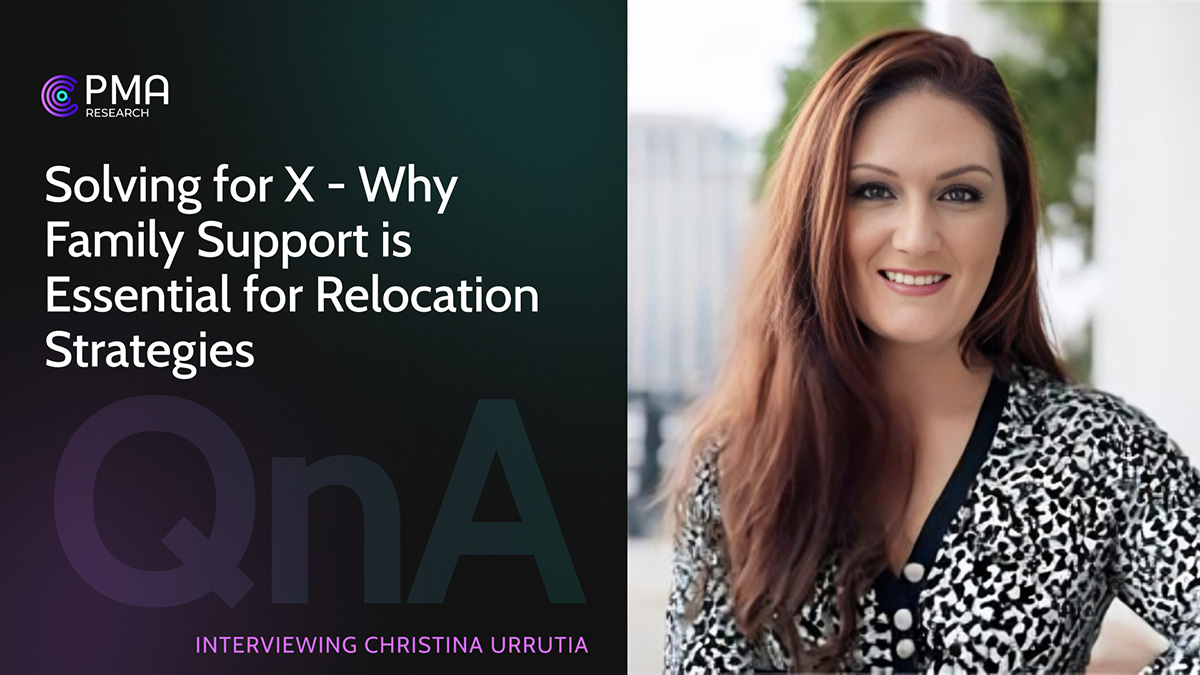
Solving for X: Why Family Support Should Be at the Heart of Relocation Policies

Can you tell us a bit about your background and your current role?
I’ve been working in relocation management and global mobility on the service provider side since 2008, starting in full-service relocation coach roles and eventually moving into mobility solution sales. Today, I serve as the Founder and Executive Director of Women of Global Mobility, a nonprofit organisation dedicated to empowering women in our industry. We offer more than just a network—we’re building a vibrant community where professional growth and personal support go hand in hand. Our focus extends beyond technical industry knowledge to address the real-life challenges women face in balancing work and life, especially in a global context.

I'm especially passionate about advocating for fair and inclusive relocation policies—ones that consider the entire family, not just the employee. Too often, spouses and children are overlooked in the process, yet their experience can make or break the success of a move. I believe organisations need to take a more holistic approach, integrating support around wellbeing, belonging, and cultural preparedness—not just the logistics.

Alongside my nonprofit work, I’m also a Global Business Manager with Global Mobility Solutions (GMS), a full-service relocation management company based in Scottsdale, Arizona. It’s a great place to put both my strategic and people-first mindset into action.
How did you get involved in Global Mobility?
I’ve been in Global Mobility ever since I graduated from university. Back in 2008, the job market was challenging, and I accepted a role as a “counselor,” which was initially described to me as more of a customer service position—answering phones and providing basic support. But once I got into it, I realised it was so much more.

The role quickly became about guiding families—particularly the trailing spouse—through the complexities of their relocation packages and helping them adjust to the overwhelming changes that come with moving across borders. It was about making a difficult process feel more manageable and human. That early experience shaped how I see the impact of mobility today—it's not just logistics; it’s about people, transitions, and support systems.
What excites you most about your work right now?
What excites me most about my work these days is the opportunity to make a real, lasting difference in people’s lives—especially women navigating the complexities of global mobility and career transitions. Through my role as Executive Director of Women of Global Mobility, I get to help build a space where women feel seen, supported, and empowered. Whether they’re just starting out, mid-career, or leading at the highest levels, we offer more than just professional development—we foster a community where every stage of life and career is respected and resourced.

It’s incredibly fulfilling to bring networking opportunities, practical career tools, speaker series, and personal development content to the table. We’re not just talking about relocation logistics—we’re diving into real, often overlooked topics like navigating menopause in the workplace, managing financial wellness as a woman, pivoting careers after time off, dressing for the role you want (not just the one you have), parenting while working across time zones, and making self-care a non-negotiable, not a luxury.

The fact that I get to champion these conversations—and watch women find clarity, confidence, and community through them—is what gets me out of bed every day. It’s work with meaning, and it goes far beyond a job description.
In your experience, what are some of the biggest trends or shifts currently happening in Global Mobility?
One of the most significant trends in Global Mobility right now is the shift from being seen purely as a relocation provider to acting as a managed services partner. Companies are looking for more than just move logistics—they want strategic support that aligns with their broader talent and business goals.

At the same time, HR tech is playing a major role in transforming how we deliver mobility services. Tools like AI, automation, and real-time data analytics are helping us create more personalised, scalable, and efficient programs. It’s not just about moving people anymore—it’s about integrating mobility into workforce planning, enhancing the employee experience, and delivering insights that drive smarter, more agile decision-making.
What’s one thing you wish more companies understood about international travel or mobility management?
One thing I wish more companies understood about international travel and mobility management is how critical family inclusion and wellbeing support are to the success of any assignment. Too often, the focus is solely on the employee, but it’s the spouse and children who often face the biggest adjustments—new cultures, schools, social circles, or even leaving behind careers of their own.

When companies invest in supporting the whole family—through things like spousal career assistance, mental health resources, cultural integration programs, and even educational support for children—they dramatically increase the chances of a successful relocation. Mobility isn’t just about logistics; it’s about helping people feel grounded, supported, and truly at home in their new environment. That level of care can make the difference between a failed assignment and a thriving, long-term placement.
Could you share a bit about your own relocation experience and what role your family played in that transition?
In 2017, I moved to Mexico with very little support, and that experience completely reshaped how I view international mobility—especially from a family perspective. At the time, I had to navigate the complexities of visa and immigration processes on my own, deal with language barriers, and adjust to a new culture without much guidance. Things like setting up a bank account or accessing healthcare suddenly became big, stressful tasks. And while I didn’t have children then, I quickly realised how isolating that kind of move can be without a strong support system.

Now, years later, I’m preparing for another international relocation—this time, moving back to the U.S. with a 5-year-old. It’s an entirely different challenge. I’m not just thinking about logistics—I’m thinking about finding the right school, helping my child adapt emotionally, and making sure he feels a sense of belonging. There are so many moving pieces: pediatric care, school registration, dual-language support, even helping him say goodbye to friends in a healthy way.

These personal experiences have made me deeply passionate about advocating for family-inclusive relocation programs. When companies overlook the needs of the spouse or children, they risk the entire success of the assignment. Support for schooling, spousal career transitions, mental health, and community integration isn’t a “nice to have”—it’s essential. Families are the foundation of stability, and when they’re cared for, employees thrive.
Why do you think family support is still treated as a ‘nice-to-have’ in most relocation packages, rather than a strategic investment?
Family support is often seen as a “nice-to-have” because historically, relocation focused mainly on the employee’s logistics and costs, assuming everything else would fall into place. But from my own experience—moving to Mexico in 2017 with little support, and now relocating back to the U.S. with a young child—I’ve seen how critical family needs like visa help, school search, and emotional support really are. When families struggle, assignments risk failure.

Many companies still view family support as an added expense rather than a strategic investment, even though it directly impacts retention and assignment success. The mindset needs to shift—family inclusion isn’t a perk; it’s essential to making global mobility work long-term.
What are some of the most common services or resources families need—but rarely receive—during an international assignment?
Spousal career support: Help with job searches, networking, and career transition resources for trailing partners.

School search and enrollment assistance: Guidance on finding the right schools, understanding curricula, and navigating admissions. Help with tuition costs or application fees for non-traditional school support options.

Language and cultural training: Programs not just for the employee, but for spouses and children to ease integration. Language and cultural training is often provided to the employee, but not extended to the spouse. Children are seen as “resilient” but the truth is - it’s damning for children to not fit into their new culture because they don’t understand the social rules of engagement.

Mental health and wellbeing resources: Access to counseling, stress management, and community-building initiatives.

Childcare and parenting support: Resources to help parents adjust, including finding childcare or extracurricular activities.
Do you think most HR teams are aware of the non-work-related pressures that affect the success of an international relocation? If not, why?
Many HR teams are starting to recognise the non-work pressures of international relocations, but it’s not universal. The focus often stays on visas, housing, and the employee’s role, while family challenges like spousal careers or kids’ schooling can be overlooked because they’re harder to see and measure.

Without direct insight or tools to address these issues, HR may underestimate their impact. That said, awareness is growing, but there’s still progress to be made for it to become standard practice across all teams.
What’s the real cost—financial, emotional, and organisational—when families don’t get the support they need during a move?
When families don’t get the support they need during a move, the costs can be significant on multiple levels:

Financially, companies face higher turnover rates, failed assignments, and increased recruitment and training expenses to replace employees who leave due to family dissatisfaction.

Emotionally, employees and their families can experience stress, isolation, and burnout, which impacts morale, productivity, and overall wellbeing.

Organisationally, a lack of family support can lead to decreased employee engagement, lower assignment success rates, and damage to the company’s reputation as an employer of choice.

Solutions and innovations to address these challenges include offering comprehensive family support programs—spousal career services, school search assistance, mental health resources, and cultural training—as well as leveraging technology to provide personalised, real-time support throughout the relocation journey. Shifting from transactional relocation services to a managed services model focused on holistic wellbeing helps organisations protect their talent investment and boost assignment success.
If you could design a minimum ‘family care package’ for every relocation, what would it include?
1. Spousal Career and Personal Development Support that includes customised career coaching, job search resources, and professional support -resume writing, interview practice, help in new language and culture to make the most of the assignment. Discounts or a stipend for continued educational resources like maintaining certifications or gaining new skills.

2. Comprehensive School Search and Educational Guidance that focused on the students wellbeing and belonging in their new location. Information on non-traditional learning schools (including access to home school, special needs, montessori, ESL (or other language support), and extracurriculars.

3. Visa and Immigration Assistance for the Whole Family with their family goals in mind. If the spouse is working, visa options should be considered to see if there’s a way to limit the impact on their career. Are there alternatives? Can visas be matched to ensure that the family unit remains together (consideration for elderly parents, nannies, etc)

4. Language, culture, and belonging partnerships that engage the family members in classes that are specific to their needs, proficiency levels and cultural intelligence. Allowing each member to find their place in the new community. Reducing isolation and culture shock.

5. Mental Health and Emotional Wellbeing Resources that give families access to counseling services (including virtual options so the counseling can be in their native language). Stress management workshops and peer support groups along with life coaching can all help families feel valued during the transition phase.

6. Practical Settling-In Assistance to help families navigate healthcare systems and find providers who meet their family’s needs in language and culture as well. It’s important for mothers to find a pediatrician that they understand and trust with their most precious family members. A general settling-in program that supports employees with opening bank accounts, understanding local taxes, childcare options and area orientation is critical to the success of a relocating family.
Do you believe companies should offer a ‘family onboarding’ as part of the relocation process—just like they do for the employee? Why or why not?
Absolutely, companies should offer ‘family onboarding’ just like they do for employees. A successful relocation depends on how well the whole family adjusts—not just the employee. When families feel supported, it reduces stress and improves productivity.

Family onboarding could include pre-move orientation for spouses and kids, a dedicated support contact, language and cultural training, spousal career resources, social events, and wellbeing check-ins after the move. This approach recognises relocation as a family experience and helps everyone settle in smoothly, benefiting both the employee and the company.
What role could a curated resource directory or concierge service play in improving access to family-focused support—especially for services not covered in relocation budgets?
By offering personalised recommendations and helping coordinate these services, a concierge can reduce stress and save families time navigating unfamiliar systems. This kind of tailored support enhances the overall relocation experience, helping families feel more confident and supported even beyond what the company directly covers. Ultimately, it’s about empowering families with the right resources to thrive, making assignments more successful and sustainable.
How can HR teams become better advocates for trailing partners and children—especially when many of these needs fall outside standard mobility policy scope?
HR teams don’t just need advocates; they need activists who actively champion the needs of trailing partners and children. One powerful way to do this is by partnering with employee network groups focused on families and global mobility. These groups enable employees to share firsthand insights about schools, healthcare, and local resources in key locations, giving HR valuable real-world feedback.

With this knowledge, HR activists can identify support gaps and push for more family-inclusive policies. These networks also foster peer support, helping families feel less isolated. Plus, HR can connect families to external resources and concierge services, making relocations smoother and more successful overall.

Authors:

Christina Urrutia is the Executive Director of Women of Global Mobility and the Global Business Manager at Global Mobility Solutions (GMS). With a deep passion for holistic relocation benefits, Christina champions the importance of family care in global mobility programs—ensuring that relocation support extends beyond the employee to include spouses, children, and the entire family unit. She advocates for relocation policies that prioritise wellbeing, cultural preparedness, and a sense of belonging, recognising these as key drivers of assignment success.

Beyond her work in mobility, Christina is a dedicated advocate for women’s empowerment in the workplace. She focuses on helping women thrive both professionally and personally, addressing challenges such as career pivots, financial health, and work-life balance. Through her leadership and speaking engagements, Christina inspires organisations to create more inclusive environments where women can achieve their career goals while maintaining personal wellbeing.

Alexia Schmolling is the Head of Operations and Academy Lead at PMA. Her focus lies on Expat Management, Employee Health and international HRM. She brings valuable insights from her international experiences.

Previous Post
GPM Chat: A Conversation on Transformation: Identity, Purpose & Global Living
Next Post
Culture Fit at a Distance – Engineering Trust in Global Virtual Teams

The impact of remote work on the physical health of employees

December 14, 2022

6 experts explain the impact of remote and hybrid work on employee mental health

September 7, 2022

How do you compensate remote workers? Insights from People Mobility Alliance and friends

May 22, 2022

Relocation strategies during crisis: experts advise on the Ukrainian conflict

March 16, 2022

Exploring the future of global mobility: Berlin event recap

November 11, 2021

How to successfully navigate moving to the USA: insights on relocation challenges for both businesses and individuals

June 16, 2021

Is expanding your business to Germany worth it? Our experts share the biggest benefits and challenges

May 6, 2021

Exploring the Work Anywhere Trend: 15 Key Insights from Our Experts

March 17, 2021
  • Imprint
  • Privacy Policy

© 2021-2025

Anas Abdi

Business Development Manager

Anas has a background in economics and discovered his passion for the Global Mobility industry a few years ago. With experience at a Big Four, he brings valuable expertise as a consultant. At PMA, he will support the streamlining of our operations and contribute to growth through his active role in sales and business development.

LinkedIn

Ayesha Khan

Marketing & Event Manager

Khan is a data-driven marketing professional with expertise in performance marketing, analytics, and digital strategy. She focuses on optimising marketing campaigns, enhancing audience engagement, and driving business growth. With a background in Marketing
and Finance, Ayesha leverages data insights to develop effective strategies and deliver measurable results. She is currently pursuing her MSc in International Information Systems at FAU in Germany, integrating technology with marketing to drive innovation
and growth.

LinkedIn

Sustainability

Sustainability faces challenges such as reducing environmental impact while maintaining operational efficiency, adapting to evolving regulatory requirements, and fostering a company-wide commitment to sustainable practices. Balancing short-term business goals with long-term environmental responsibility can be complex, as can tracking and measuring progress toward sustainability targets. Engaging employees at all levels to adopt sustainable habits and practices requires ongoing education and leadership support.

Our consulting approach on sustainability focuses on helping organisations integrate sustainable practices into their operations. Our consultants provide training on reducing environmental impact, optimising resource use, and meeting regulatory standards. We assist in developing sustainability strategies that align with company goals while fostering a culture of environmental responsibility. Through the learning of sustainable habits and continuous support, we help organisations track progress, engage employees, and achieve tangible sustainability outcomes.

Expat Wellbeing

Expat wellbeing faces challenges such as adapting to new cultures, managing isolation, and balancing work-life dynamics in an unfamiliar environment. Expatriates often struggle with the loss of familiar social networks, language barriers, and cultural differences, which can lead to stress and burnout. Ensuring mental and physical well-being while navigating different healthcare systems and support structures adds complexity to the expatriate experience.

Our consulting approach on expat wellbeing focuses on providing comprehensive support to ensure expatriates thrive in their new environment. Our consultants offer resources and training to enhance cultural adaptation, promote mental resilience, and improve work-life balance. We help organisations implement wellness programs, foster strong support networks, and establish open communication channels. This approach strengthens expatriate well-being, increases job satisfaction, and enhances overall performance abroad.

Cultural Awareness

Cultural awareness faces challenges like overcoming unconscious biases and stereotypes that can hinder understanding and inclusion. Communicating effectively across different cultures can be complex due to language barriers and varying norms. Misinterpretations of behaviors or traditions may lead to conflict or offense. Integrating diverse cultural perspectives into decision-making can be difficult, and there’s the challenge of ensuring all employees feel respected and valued, which requires ongoing education and open dialogue.

Our consulting approach on cultural awareness involves guiding organisations to recognise and respect diverse cultural perspectives. Our consultants provide training to overcome biases, improve cross-cultural communication, and foster an inclusive environment. We help develop policies and practices that integrate diverse viewpoints into decision-making. Additionally, our consultants facilitate open dialogue and continuous learning, ensuring all employees feel respected and valued. This approach enhances collaboration, reduces conflicts, and supports a more cohesive workplace culture.

Local ecosystem connections

Local ecosystem building faces challenges like limited resources, including funding and talent, which can hinder growth. Fragmented networks and poor collaboration between stakeholders often lead to inefficiencies. There’s also a lack of trust and shared vision among participants. Regulatory hurdles and slow policy adaptation can stifle innovation. Additionally, small markets may struggle to attract investors and scale, while cultural resistance to change can impede progress.

Our consulting approach on local ecosystem connections involves helping organisations build and strengthen relationships within their community. Our consultants identify key stakeholders, such as local businesses, government entities, and nonprofits, and create strategies to foster collaboration and mutual support. We facilitate networking opportunities, promote knowledge sharing, and help align the organisation’s goals with community needs. Additionally, we assist in leveraging local resources, enhancing the organization’s reputation, and driving sustainable growth within the local ecosystem.

People-Focused Approach

A people-focused approach faces challenges such as balancing individual needs with organisational goals, which can lead to conflicting priorities. Ensuring consistent and fair treatment while accommodating diverse employee needs can be complex. Managing varying expectations and maintaining engagement across different personality types requires nuanced strategies. Additionally, measuring the impact of people-focused initiatives on overall performance and adjusting approaches based on feedback can be challenging. Ensuring resources are allocated effectively to support people-centered practices is also crucial.

Our consulting approach on a people-focused approach involves assessing organisational culture and individual needs to create strategies that prioritise employee well-being and engagement. Our consultants design tailored initiatives that align personal goals with business objectives, ensuring fairness and consistency. They facilitate effective communication, provide training, and support leadership in fostering a positive work environment. Our consultants also help measure the impact of people-focused practices, adjust strategies based on feedback, and optimise resource allocation to enhance overall effectiveness.

Change Management

HR change management faces challenges like employee resistance, where fear of the unknown or discomfort with new processes can hinder acceptance. Communication breakdowns can lead to misunderstandings and decreased morale. Aligning leadership and getting their buy-in is critical but can be difficult. Managing the pace of change to avoid overwhelming staff, addressing skill gaps through training, and maintaining productivity during transitions are also significant hurdles. Additionally, measuring the effectiveness of change and making necessary adjustments is an ongoing challenge.

Our consulting approach on change management involves guiding organisations through transitions by developing strategies to address resistance, ensuring clear and consistent communication, and aligning leadership with change objectives. Our consultants design tailored training programs to close skill gaps and support employee adaptation. We help manage the pace of change to minimize disruption, maintain productivity, and implement metrics to measure success. Continuous feedback and adjustments are made to ensure a smooth and effective transformation.

HR Digitalisation Project Implementation

Implementing HR digitalisation projects faces challenges like resistance to change, where employees may fear job displacement or struggle with new systems. Integrating new digital tools with existing legacy systems can be complex and costly. Ensuring data security and privacy compliance is critical, especially with sensitive employee information. Additionally, inadequate training and support can hinder adoption, while managing the project’s scope, budget, and timeline adds further pressure to successful implementation.

Our consulting approach on HR digitalisation projects involves addressing key challenges such as resistance to change by fostering a culture of openness and providing clear communication about the benefits and support available. Our consultants help ensure a smooth integration of new tools with legacy systems, minimising disruption and costs. We emphasise data security and privacy compliance, crucial for protecting sensitive employee information. Our effective training programs are designed to enhance user adoption, and consultants meticulously manage the project scope, budget, and timeline to ensure successful implementation.

Tech Vendor Screening

Tech vendor screening presents challenges like assessing vendor reliability, as companies must evaluate a vendor’s financial stability, reputation, and track record. Identifying the right fit requires aligning the vendor’s offerings with business needs, which can be difficult with technical complexities. Data security is a critical concern, demanding thorough scrutiny of the vendor’s security practices. Additionally, there’s the challenge of managing vendor lock-in risks and negotiating favorable contract terms.

Our consulting approach on tech vendor screening involves guiding businesses through selecting the best vendors by assessing their offerings, reliability, and compatibility with the organisation’s needs. Our consultants evaluate vendors’ financial stability, scalability, and long-term viability. We also ensure compliance with industry regulations, focus on data security, and mitigate the risk of vendor lock-in. Additionally, our consultants help align vendor choices with the company’s budget and growth strategies, ensuring a tailored, sustainable partnership.

Tech Vendor Selection

Selecting the right tech vendor poses challenges such as navigating a crowded market with numerous options, making it hard to distinguish between similar offerings. There’s a risk of vendor lock-in, where future flexibility is compromised. Assessing the vendor’s reliability, financial stability, and long-term viability is crucial. Compatibility with existing systems, data security, and compliance with regulations are also key concerns. Budget constraints and ensuring the vendor can scale with business growth further complicate the decision.

Our consulting approach on tech vendor selection involves helping organisations choose the best vendor to meet their specific needs. Consultants assess business requirements, compare vendors, and evaluate their offerings for compatibility, scalability, and security. Our consultants consider the vendor’s reputation, financial health, and customer support. We also negotiate contracts to avoid vendor lock-in and ensure cost-effectiveness. The goal is to align vendor capabilities with long-term business strategies, reducing risks and ensuring value.

Global Talent Pools

Global talent pools present challenges such as managing diverse skill sets, cultural differences, and varying educational standards. Time zone disparities can hinder collaboration, while legal and regulatory differences complicate employment contracts and compliance. Language barriers may affect communication and integration. Additionally, ensuring equitable opportunities and managing compensation across regions are difficult. Competition for top talent is intense, making retention a critical issue.

Our consulting approach on global talent pools involves helping organisations source, attract, and manage talent from diverse regions. It requires strategies for navigating cultural differences, ensuring compliance with local labor laws, and overcoming language barriers. Our consultants guide on optimising remote work, aligning global talent with business needs, and fostering collaboration across time zones. We also focus on creating equitable opportunities, competitive compensation packages, and effective retention strategies in a global context.

Global People Collaboration

Global People Collaboration faces challenges such as coordinating across time zones, overcoming language barriers, and aligning different work styles and cultural expectations. Teams often struggle with maintaining clear communication and fostering trust in remote, cross-border environments. Misunderstandings can arise due to cultural differences, which may hinder collaboration and decision-making. Additionally, managing virtual teams can complicate relationship-building and team cohesion, leading to a lack of engagement and reduced productivity.

Our consulting approach to global people collaboration focuses on helping organisations enhance communication, trust, and teamwork in multinational environments. Our consultants provide training on effective virtual collaboration, cultural sensitivity, and inclusive communication strategies. We assist in developing processes that encourage knowledge sharing and cross-cultural understanding, ensuring that teams are aligned in their goals and can work efficiently across borders. This approach fosters stronger relationships, increases engagement, and drives productivity, creating a more connected and effective global workforce.

Global Mindset

The challenges of a global mindset include navigating cultural differences, language barriers, and varying business practices, which can lead to misunderstandings and conflicts. Additionally, managing diverse teams requires sensitivity and adaptability to different communication styles and expectations. Balancing global strategies with local needs can be complex, and staying informed about international regulations, economic conditions, and political climates adds further complexity to decision-making processes.

Our consulting approach on global mindset involves guiding organisations to embrace cultural diversity, fostering cross-cultural communication, and aligning global strategies with local practices. We help teams to navigate international markets, adapt to varying regulations, and manage diverse teams effectively. Our consultants also emphasise the importance of cultural sensitivity, inclusivity, and adaptability in leadership to ensure successful global operations and sustainable growth.

International Talent Development

International talent development faces challenges like cultural differences, language barriers, and varying educational backgrounds, which affect training and communication. Aligning development programs with local norms while maintaining global standards is difficult. Differences in work ethics, leadership styles, and career expectations complicate talent retention and growth. Additionally, logistical issues like time zones and technology access can hinder the implementation of consistent development initiatives.

Our consulting approach on international talent development involves creating tailored strategies that respect cultural differences and align with global business goals. This includes designing cross-cultural training programs, leadership development initiatives, and succession planning. Our consultants address language barriers, diverse learning preferences, and varying educational backgrounds. They also advise on retaining top talent, ensuring global consistency in skills development, and leveraging technology to deliver effective training across regions.

Global Workforce Management

Global workforce management faces challenges like cultural differences, varying labour laws, time zone coordination, and communication barriers. It also involves managing remote teams, ensuring consistent training, addressing different work ethics, and navigating political and economic instability.

Our consulting approach helps to balance global policies. This involves advising on cross-cultural communication, aligning global and local HR policies, and navigating diverse labour laws. Our team offers strategies for managing the complexities of remote teams, optimising talent acquisition, and ensuring compliance with international regulations. Our consultants also address challenges in employee engagement, leadership development, and compensation strategies. We help organisations to effectively manage a diverse, global workforce while maintaining productivity and cohesion.

    You want to become a partner?

      International People Tech Award

      You have an innovative service/ product and you need exposure? Don't miss this opportunity to pitch your innovation and gain exposure in front of HR experts!

      Alexia Schmolling

      Head of Operations & PMA Academy Lead

      Alexia is a Project Consultant who joined the PMA in 2024. Her focus lies on international HRM, expat management and mental health. She is responsible for content and partner management, and brings valuable insights from her international experience.

      LinkedIn

      Join us

      The members of the People Mobility Alliance are united by the same passion: fostering cultural diversity and embracing technological advancement.
      We welcome everyone who is open to new perspectives, likes to give and receive new ideas and who will therefore help shape this Alliance. Find like-minded people and exchange ideas about relevant topics, such as HR strategy, digitization, transformation processes and more. Most importantly, help drive change in how People Mobility is performed. Join today.

        Join us

          [group role][/group]

          Stefan Remhof

          Managing Partner

          Stefan joined the People Mobility Alliance at the beginning of 2023. He brings valuable insights into the academic side of People Mobility into the Alliance. Together with co-founders Daniel and Mira he is part of the PMA Management team.

          LinkedIn

          Mira Pathak

          Co-Founder

          Mira currently works for AIRINC in Germany and has been working in Global Mobility since 2006. Of German-Indian origin, she has lived and worked in different countries but spent the majority of her working life in London before moving back to her native Germany in 2019. She believes that personal connection and experiences are the key to successful business interactions. And that even in business, it’s the person behind the employee that makes all the difference.

          LinkedIn

          Daniel Zinner

          Co-founder

          Daniel is a global workforce consultant, podcaster and investor. Cultural diversity and global collaboration have been his passion for more than 20 years. He has worked in Global Mobility for various corporations in many different countries, but is currently based in Berlin, where he enjoys the city’s creativity, diversity and open mindset.

          LinkedIn

          Newsletter