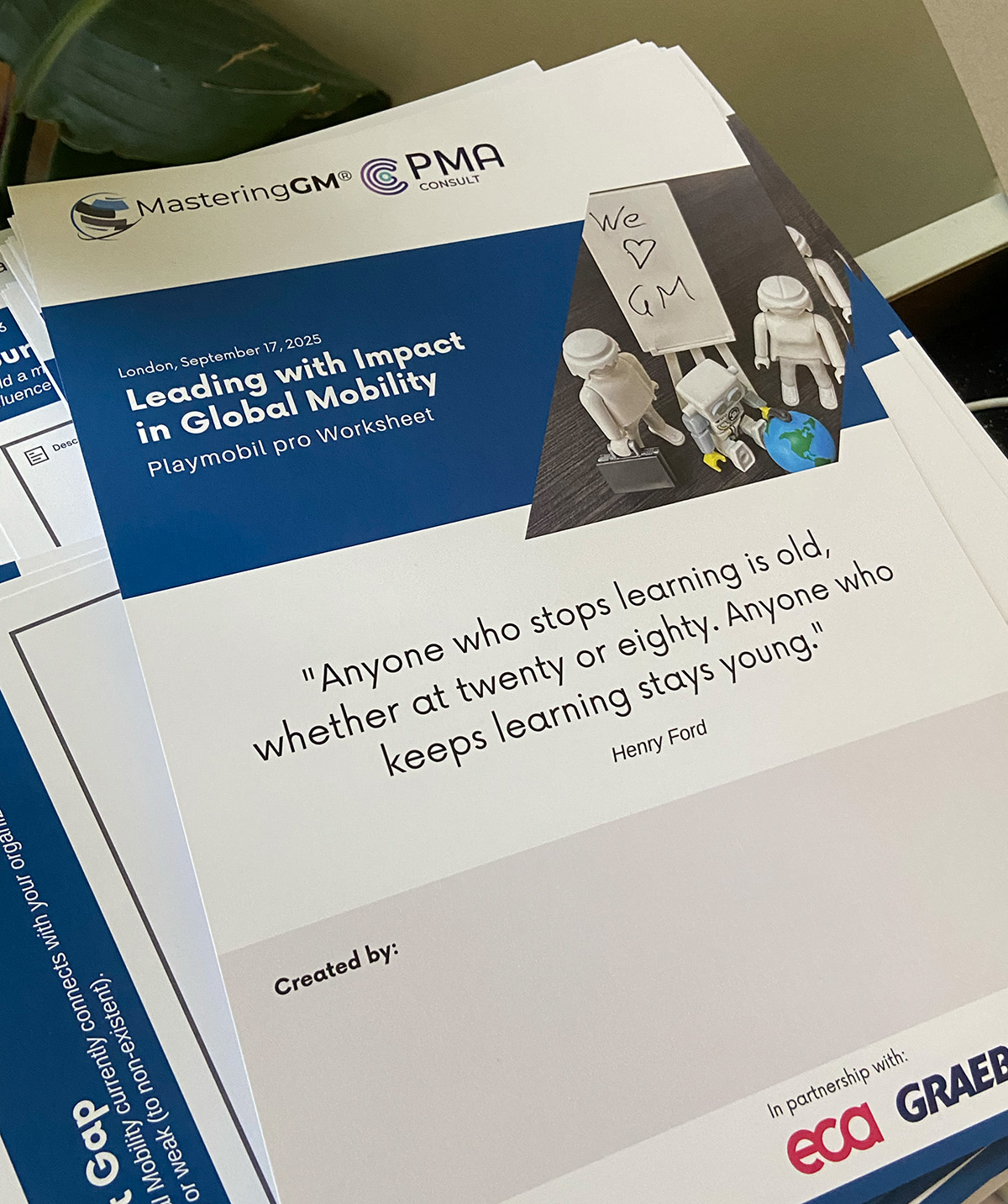
There are the buildings that define a skyline, and there are the ones that define an ambition. The Gherkin, the city’s iconic architectural symbol, provided the suitably daring backdrop for a debate of the evolution of the Global Mobility function’s ambition. On a crisp autumn morning, September 14, the People Mobility Alliance in partnership with MasteringGM, organised an industry expert workshop titled “Leading with Impact: How Global Mobility Fuels Talent and Business Success“.
The fundamental query posed was not novel, but responses considered were purposely unsophisticated: with war for talent globally and business ecosystems established, how does Global Mobility transition from support function to strategic facilitator? The discussions, echoing off the curved glass walls of The Gherkin, defined a coherent consensus: the shift from periphery to centre field has already begun, but it requires intentional steps.

The Mandate: Transcending from Operational Mooring to Strategic Sail
For too long Global Mobility has been viewed as the logistics unit—the visa, tax equalisation, and move checklist gurus. While these functions remain the essential foundation, the workshop highlighted an appealing change in mindset. The role is no longer to move individuals, but to mobilise talent in such a way that it can directly influence business outcomes. The key is to move the language of value.
The day was structured around transitioning from strategic concepts to action plans of operations. One of the recurring themes was the need for data-based storytelling. It is not enough to know the cost of an assignment; GM leaders must be able to tell the story of the Return on Mobility—how a global assignment develops leaders of the future, sparks innovation in emerging markets, and retains top talent. This movement away from cost reporting towards investment demonstration is the initial essential step in getting the attention of the C-suite.
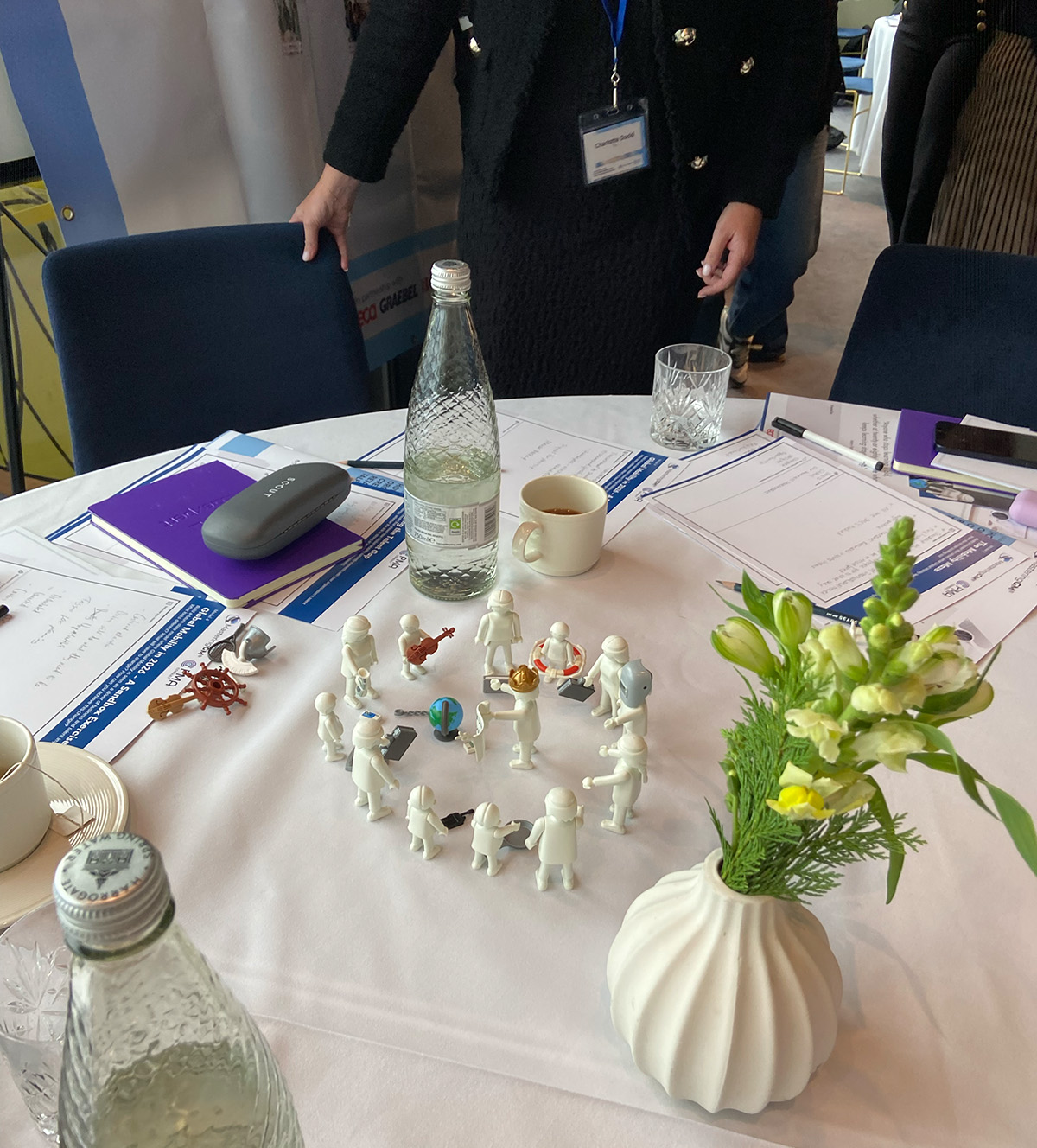
Bridging the Gap: Communication, Education, and Breaking Silos
So how does one get that much-desired “seat at the table”? The workshop picked up a number of levers:
Proactive Communication & Education: It is the role of GM professionals to teach senior leadership and HR business partners the strategic value of mobility. That means speaking business—growth, risk mitigation, talent development—rather than policy exception parlance.
Breaking Down Silos: Strategic influence cannot happen alone. GM must actively connect with Talent Acquisition, Learning & Development, and Total Rewards to provide seamless, talent-centric experiences.
Embracing Technology: The right tools are no longer an option but a necessity. The right platform technology can automate the operational, enabling GM professionals to focus on the strategic: coaching assignees, counseling business leaders, and examining programme effectiveness.
PMA‘s and MasteringGM’s facilitated sessions encouraged participants to think outside the box in coming up with creative solutions to these persistent dilemmas, moving the conversation away from being reactive problem-solvers to proactive business partners.

A Toast to Culture and Community
No PMA event would be complete without cultivating the sense of community spirit that is at its heart. Following the hectic and productive workshop, the agenda easily transitioned into a celebration of shared purpose and cross-cultural bonding.
PMA thanks our fantastic partners Blick Rothenberg, ECA International and Graebel that ensured that this event was a runaway success. Ascending to a strategic future for Global Mobility is one we do together, and one we are honored to do with you.
Author:
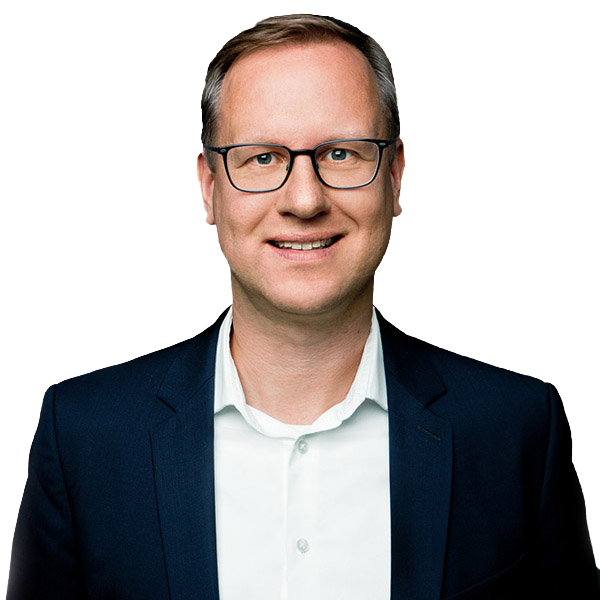
Stefan Remhof is Managing Partner of the People Mobility Alliance and Professor of International Management at IU International University. He possesses extensive expertise in global mobility, expat management, and international assignments.