• Home
  • Consulting
    • Implementation Partner
    • Interim Management
    • Request for Proposal (RfP)
    • Deel × PMA Global Payroll Series
  • Academy
    • Courses Overview
    • GM Professional
    • GM Expert
    • GM Leader
  • Resources
    • Content
    • Pet Mobility Award
    • PMA x Sports
  • Events
  • English

Use Case: Strategic Capability Enablement for Global Mobility Leaders

How PMA Academy Upskills Global Mobility Leaders for Future-Ready Impact

Context & Challenge

Global Mobility leaders and experts operate in an environment shaped by:

  • cost pressures
  • talent shortages
  • chaning business needs
  • increasing compliance complexity
  • rising expectations from business leadership
  • geopolitical uncertainty

Yet many Global Mobility professionals are still positioned as operational executors, not strategic business partners.

The challenge is not a lack of knowledge. It is a lack of:

  • strategic positioning
  • shared language with the business
  • confidence to influence senior stakeholders and C-level
  • time and space to reflect, rethink, and reposition their role

Many networking events inspire, but they rarely change how people think, make decisions, or behave when they return to their organisations.

PMA Academy’s Approach

PMA Academy Global Mobility Leader Courses are onsite, immersive capability-building formats lasting 1–2 days, intentionally designed to move participants: From operational expertise to real strategic influence. 

They are not trainings. They are strategic working labs where Global Mobility leaders actively develop future-ready capabilities. Our events are hosted at inspiring and truly unforgettable locations – away from grey, windowless hotels.

The PMA Capability Enablement Framework (Applied to Global Mobility)

1️⃣ Business Impact (Why the Course Exists)

At the top of every PMA Academy GM course is a clear objective:

Enable Global Mobility leaders to actively shape talent, business, and global leadership outcomes — not just manage processes.

Participants work on:

  • positioning Global Mobility as a business enabler
  • translating complex ideas into tangible models, making abstract concepts accessible
  • Breaking traditional thought barriers, inviting innovative solutions to complex problems as part of the experiential learning approach
  • linking GM decisions to talent strategy and growth
  • strengthening their role as strategic advisors
  • active participation, increasing engagement and retention of information

From an organisational perspective, the courses support:

  • increased effectiveness of Global Mobility investments through better prioritisation and storytelling
  • clearer strategic decision-making around global talent deployment
  • stronger alignment between Global Mobility, Talent, and Leadership agendas
  • reduced dependency on reactive, exception-driven GM models

2️⃣ Core Enablement Engine (What Happens in the Room)

At the heart of the courses is active capability development, not passive listening.

Each programme combines:

  • thought leader input and industry insights
  • peer exchange at decision-maker level
  • structured reflection and discussion
  • hands-on exercises and teamwork, employing creative methods like LEGO® Serious Play® and PLAYMOBIL® PRO
  • strategic action planning

Participants do not just consume ideas. They apply them to their own organisational reality.

Typical focus areas include:
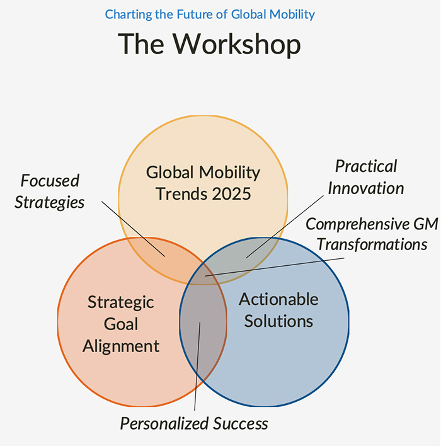
  • Tte strategic role of Global Mobility within talent and business strategy
  • stakeholder influence and business-oriented communication
  • return on Global Mobility thinking and data-based storytelling
  • Future-proofing GM
  • Redefining GM’s value proposition beyond operational delivery

3️⃣ The Three Enablement Waves

Wave 1 – Strategic Orientation

Understanding the strategic role of Global Mobility

Participants:

  • frame Global Mobility within talent, leadership and business strategy
  • challenge existing role definitions
  • develop a shared language for strategic impact

Example:

  • Framing Mobility’s Role using interactive methods (e.g., LEGO® Serious Play® and PLAYMOBIL® PRO.)
  • Mapping GM’s influence across talent, leadership and business outcomes

Wave 2 – Application & Capability Building

Translating insight into strategic thinking and skills

Participants:

  • work in teams on real challenges
  • test perspectives and assumptions
  • learn from peers, experts and research

Example:

  • Industry insights on how leading organisations use mobility to drive growth
  • Discussion and reflection on alignment with business and talent goals

Wave 3 – Integration & Action

Turning insight into concrete next steps

Participants:

  • define individual and organisational action points
  • identify where to strengthen influence, governance or positioning
  • leave with clear priorities — not abstract inspiration
  • develop practical tools, narratives, or positioning statements they can immediately use with stakeholders

Example:

  • Action Planning sessions focused on what can realistically be implemented
  • Informal discussions that deepen learning and strengthen peer networks

Foundation: What Makes the Format Work

PMA Academy courses are built on:

  • psychological safety and peer-level exchange
  • facilitation, not lecturing
  • diversity of perspectives (experts, practitioners, decision-makers)
  • space for reflection away from daily operations

This creates an environment where:

  • difficult questions can be discussed openly
  • experience is valued as much as theory
  • learning becomes personal, relevant and sustainable

Example in Practice

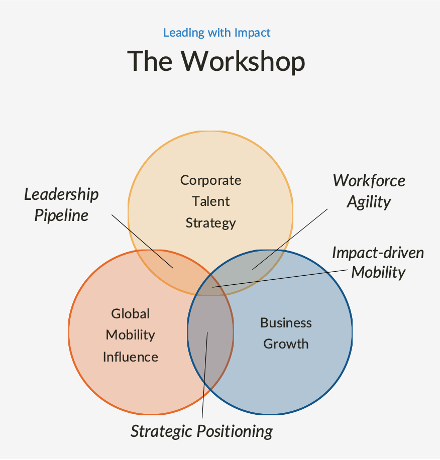
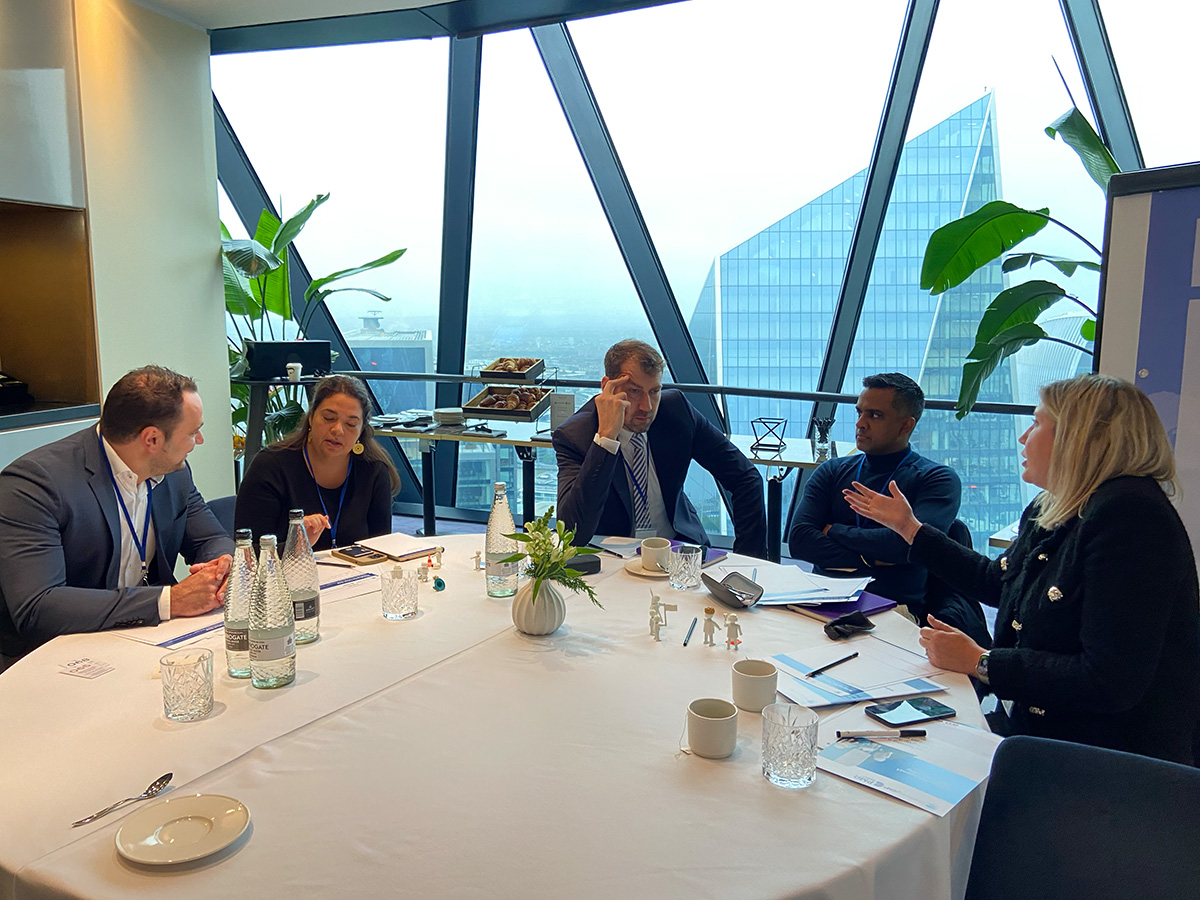
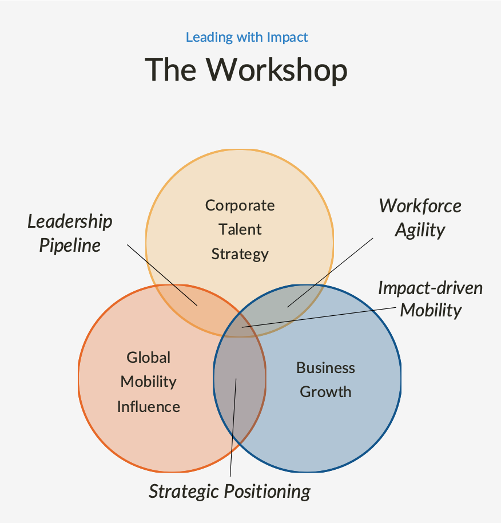
Workshop: “Leading with Impact – How Global Mobility Fuels Talent and Business Success” (London)

In this one-day onsite format:

  • Global Mobility leaders, experts and decision-makers came together
  • strategic challenges were explored collaboratively
  • innovative methods and discussions were used to rethink GM’s role
  • industry insights grounded discussions in real-world practice
  • participants developed concrete ideas to strengthen their strategic impact

The result was not just inspiration — but clarity, confidence and capability. The workshop “Leading with Impact” serves as a practical illustration of how this capability enablement approach translates into real-world dialogue, reflection, and action.

Postconditions (What Participants Take Back)

After PMA Academy Global Mobility Leader Courses, participants:

  • think more strategically about their role and influence discussions the very next day
  • speak the language of business and talent leaders (clear talking points to reposition Global Mobility in stakeholder conversations)
  • feel confident challenging outdated GM models and challenge existing decisions using new questions and frameworks
  • have concrete ideas and action points for their organisation
  • are connected to a strong peer and expert network

Global Mobility becomes a leadership function — not a support role.

Why This Matters

In a world of increasing complexity, Global Mobility needs:

  • strategic thinkers
  • confident leaders
  • future-ready capabilities

PMA Academy does not teach “best practices.” We enable Global Mobility professionals to shape the future of their function.

This format is specifically designed for:

  • Senior Global Mobility leaders and experienced practitioners
  • GM professionals transitioning from operational ownership to strategic influence
  • HR leaders seeking to reposition mobility as a talent and business lever

It is particularly relevant for organisations facing growth, transformation, or increasing global complexity.

Upcoming Courses & Participation

PMA Academy Global Mobility Leader Courses are offered across different locations and topics throughout the year. For upcoming dates, topics, and locations, please refer to the PMA Academy programme overview or our event page.

Authors:
Daniel Zinner is an international HR expert, entrepreneur, and communications consultant. His expertise lies in HR, strategy, digitalisation, and transformation strategy.

Alexia Schmolling is the Head of Operations and Academy Lead at PMA. Her focus lies on Expat Management, Employee Health and international HRM. She brings valuable insights from her international experiences.

Previous Post
Use Case: AI Enablement for Global Mobility at PMA Academy
Next Post
Use Case: Turn-Key Delivery of a Global Mobility Function

region

EMEA, Americas

industry

Law & Legal Advice

company size

2,000+ employees

AI Enablement – Systems in the Enterprise

February 2, 2026

Use Case: AI Enablement for Corporate Functions at PMA Academy

February 2, 2026

Use Case: Turn-Key Delivery of a Global Mobility Function

February 2, 2026

Use Case: AI Enablement for Global Mobility at PMA Academy

February 2, 2026

Why Pets Belong at the Heart of Global Mobility

January 30, 2026

Behind the Scenes of the International HR Tech Conference

January 30, 2026

PMA Perspectives: AI Enablement in Corporate Functions

January 22, 2026

Global Payroll Audits: The Hidden Backbone of Compliance and Trust

January 10, 2026

Choosing the Right Global Payroll Partner: A Smarter Way Forward

January 10, 2026

Where Compliance Meets Strategy in Global Payroll

January 10, 2026
  • Imprint
  • Privacy Policy

© 2021-2026

Guy Perraudeau

Global Mobility Strategist & Emerging Leader Developer | Heilbronn, Germany

Guy is an HR Global Mobility expert with 18+ years of experience working on talent strategies in global organisations. Through senior roles in Big4 consulting and as Head of Global Mobility at Schwarz Group, he has been closely involved in large-scale transformation, growth initiatives, and long-term talent and business decisions. His investment perspective is shaped by a strong belief in globally minded leadership, sustainable growth, and organisations that use mobility and people strategy as levers for long-term value creation. Guy offers a wealth of knowledge in transforming operational functions into strategic business partners with a global vision.

LinkedIn

Anas Abdi

Business Development Manager

Anas has a background in economics and discovered his passion for the Global Mobility industry a few years ago. With experience at a Big Four, he brings valuable expertise as a consultant. At PMA, he will support the streamlining of our operations and contribute to growth through his active role in sales and business development.

LinkedIn

Ayesha Khan

Marketing & Event Manager

Khan is a data-driven marketing professional with expertise in performance marketing, analytics, and digital strategy. She focuses on optimising marketing campaigns, enhancing audience engagement, and driving business growth. With a background in Marketing
and Finance, Ayesha leverages data insights to develop effective strategies and deliver measurable results. She is currently pursuing her MSc in International Information Systems at FAU in Germany, integrating technology with marketing to drive innovation
and growth.

LinkedIn

Sustainability

Sustainability faces challenges such as reducing environmental impact while maintaining operational efficiency, adapting to evolving regulatory requirements, and fostering a company-wide commitment to sustainable practices. Balancing short-term business goals with long-term environmental responsibility can be complex, as can tracking and measuring progress toward sustainability targets. Engaging employees at all levels to adopt sustainable habits and practices requires ongoing education and leadership support.

Our consulting approach on sustainability focuses on helping organisations integrate sustainable practices into their operations. Our consultants provide training on reducing environmental impact, optimising resource use, and meeting regulatory standards. We assist in developing sustainability strategies that align with company goals while fostering a culture of environmental responsibility. Through the learning of sustainable habits and continuous support, we help organisations track progress, engage employees, and achieve tangible sustainability outcomes.

Expat Wellbeing

Expat wellbeing faces challenges such as adapting to new cultures, managing isolation, and balancing work-life dynamics in an unfamiliar environment. Expatriates often struggle with the loss of familiar social networks, language barriers, and cultural differences, which can lead to stress and burnout. Ensuring mental and physical well-being while navigating different healthcare systems and support structures adds complexity to the expatriate experience.

Our consulting approach on expat wellbeing focuses on providing comprehensive support to ensure expatriates thrive in their new environment. Our consultants offer resources and training to enhance cultural adaptation, promote mental resilience, and improve work-life balance. We help organisations implement wellness programs, foster strong support networks, and establish open communication channels. This approach strengthens expatriate well-being, increases job satisfaction, and enhances overall performance abroad.

Cultural Awareness

Cultural awareness faces challenges like overcoming unconscious biases and stereotypes that can hinder understanding and inclusion. Communicating effectively across different cultures can be complex due to language barriers and varying norms. Misinterpretations of behaviors or traditions may lead to conflict or offense. Integrating diverse cultural perspectives into decision-making can be difficult, and there’s the challenge of ensuring all employees feel respected and valued, which requires ongoing education and open dialogue.

Our consulting approach on cultural awareness involves guiding organisations to recognise and respect diverse cultural perspectives. Our consultants provide training to overcome biases, improve cross-cultural communication, and foster an inclusive environment. We help develop policies and practices that integrate diverse viewpoints into decision-making. Additionally, our consultants facilitate open dialogue and continuous learning, ensuring all employees feel respected and valued. This approach enhances collaboration, reduces conflicts, and supports a more cohesive workplace culture.

Local ecosystem connections

Local ecosystem building faces challenges like limited resources, including funding and talent, which can hinder growth. Fragmented networks and poor collaboration between stakeholders often lead to inefficiencies. There’s also a lack of trust and shared vision among participants. Regulatory hurdles and slow policy adaptation can stifle innovation. Additionally, small markets may struggle to attract investors and scale, while cultural resistance to change can impede progress.

Our consulting approach on local ecosystem connections involves helping organisations build and strengthen relationships within their community. Our consultants identify key stakeholders, such as local businesses, government entities, and nonprofits, and create strategies to foster collaboration and mutual support. We facilitate networking opportunities, promote knowledge sharing, and help align the organisation’s goals with community needs. Additionally, we assist in leveraging local resources, enhancing the organization’s reputation, and driving sustainable growth within the local ecosystem.

People-Focused Approach

A people-focused approach faces challenges such as balancing individual needs with organisational goals, which can lead to conflicting priorities. Ensuring consistent and fair treatment while accommodating diverse employee needs can be complex. Managing varying expectations and maintaining engagement across different personality types requires nuanced strategies. Additionally, measuring the impact of people-focused initiatives on overall performance and adjusting approaches based on feedback can be challenging. Ensuring resources are allocated effectively to support people-centered practices is also crucial.

Our consulting approach on a people-focused approach involves assessing organisational culture and individual needs to create strategies that prioritise employee well-being and engagement. Our consultants design tailored initiatives that align personal goals with business objectives, ensuring fairness and consistency. They facilitate effective communication, provide training, and support leadership in fostering a positive work environment. Our consultants also help measure the impact of people-focused practices, adjust strategies based on feedback, and optimise resource allocation to enhance overall effectiveness.

Change Management

HR change management faces challenges like employee resistance, where fear of the unknown or discomfort with new processes can hinder acceptance. Communication breakdowns can lead to misunderstandings and decreased morale. Aligning leadership and getting their buy-in is critical but can be difficult. Managing the pace of change to avoid overwhelming staff, addressing skill gaps through training, and maintaining productivity during transitions are also significant hurdles. Additionally, measuring the effectiveness of change and making necessary adjustments is an ongoing challenge.

Our consulting approach on change management involves guiding organisations through transitions by developing strategies to address resistance, ensuring clear and consistent communication, and aligning leadership with change objectives. Our consultants design tailored training programs to close skill gaps and support employee adaptation. We help manage the pace of change to minimize disruption, maintain productivity, and implement metrics to measure success. Continuous feedback and adjustments are made to ensure a smooth and effective transformation.

HR Digitalisation Project Implementation

Implementing HR digitalisation projects faces challenges like resistance to change, where employees may fear job displacement or struggle with new systems. Integrating new digital tools with existing legacy systems can be complex and costly. Ensuring data security and privacy compliance is critical, especially with sensitive employee information. Additionally, inadequate training and support can hinder adoption, while managing the project’s scope, budget, and timeline adds further pressure to successful implementation.

Our consulting approach on HR digitalisation projects involves addressing key challenges such as resistance to change by fostering a culture of openness and providing clear communication about the benefits and support available. Our consultants help ensure a smooth integration of new tools with legacy systems, minimising disruption and costs. We emphasise data security and privacy compliance, crucial for protecting sensitive employee information. Our effective training programs are designed to enhance user adoption, and consultants meticulously manage the project scope, budget, and timeline to ensure successful implementation.

Tech Vendor Screening

Tech vendor screening presents challenges like assessing vendor reliability, as companies must evaluate a vendor’s financial stability, reputation, and track record. Identifying the right fit requires aligning the vendor’s offerings with business needs, which can be difficult with technical complexities. Data security is a critical concern, demanding thorough scrutiny of the vendor’s security practices. Additionally, there’s the challenge of managing vendor lock-in risks and negotiating favorable contract terms.

Our consulting approach on tech vendor screening involves guiding businesses through selecting the best vendors by assessing their offerings, reliability, and compatibility with the organisation’s needs. Our consultants evaluate vendors’ financial stability, scalability, and long-term viability. We also ensure compliance with industry regulations, focus on data security, and mitigate the risk of vendor lock-in. Additionally, our consultants help align vendor choices with the company’s budget and growth strategies, ensuring a tailored, sustainable partnership.

Tech Vendor Selection

Selecting the right tech vendor poses challenges such as navigating a crowded market with numerous options, making it hard to distinguish between similar offerings. There’s a risk of vendor lock-in, where future flexibility is compromised. Assessing the vendor’s reliability, financial stability, and long-term viability is crucial. Compatibility with existing systems, data security, and compliance with regulations are also key concerns. Budget constraints and ensuring the vendor can scale with business growth further complicate the decision.

Our consulting approach on tech vendor selection involves helping organisations choose the best vendor to meet their specific needs. Consultants assess business requirements, compare vendors, and evaluate their offerings for compatibility, scalability, and security. Our consultants consider the vendor’s reputation, financial health, and customer support. We also negotiate contracts to avoid vendor lock-in and ensure cost-effectiveness. The goal is to align vendor capabilities with long-term business strategies, reducing risks and ensuring value.

Global Talent Pools

Global talent pools present challenges such as managing diverse skill sets, cultural differences, and varying educational standards. Time zone disparities can hinder collaboration, while legal and regulatory differences complicate employment contracts and compliance. Language barriers may affect communication and integration. Additionally, ensuring equitable opportunities and managing compensation across regions are difficult. Competition for top talent is intense, making retention a critical issue.

Our consulting approach on global talent pools involves helping organisations source, attract, and manage talent from diverse regions. It requires strategies for navigating cultural differences, ensuring compliance with local labor laws, and overcoming language barriers. Our consultants guide on optimising remote work, aligning global talent with business needs, and fostering collaboration across time zones. We also focus on creating equitable opportunities, competitive compensation packages, and effective retention strategies in a global context.

Global People Collaboration

Global People Collaboration faces challenges such as coordinating across time zones, overcoming language barriers, and aligning different work styles and cultural expectations. Teams often struggle with maintaining clear communication and fostering trust in remote, cross-border environments. Misunderstandings can arise due to cultural differences, which may hinder collaboration and decision-making. Additionally, managing virtual teams can complicate relationship-building and team cohesion, leading to a lack of engagement and reduced productivity.

Our consulting approach to global people collaboration focuses on helping organisations enhance communication, trust, and teamwork in multinational environments. Our consultants provide training on effective virtual collaboration, cultural sensitivity, and inclusive communication strategies. We assist in developing processes that encourage knowledge sharing and cross-cultural understanding, ensuring that teams are aligned in their goals and can work efficiently across borders. This approach fosters stronger relationships, increases engagement, and drives productivity, creating a more connected and effective global workforce.

Global Mindset

The challenges of a global mindset include navigating cultural differences, language barriers, and varying business practices, which can lead to misunderstandings and conflicts. Additionally, managing diverse teams requires sensitivity and adaptability to different communication styles and expectations. Balancing global strategies with local needs can be complex, and staying informed about international regulations, economic conditions, and political climates adds further complexity to decision-making processes.

Our consulting approach on global mindset involves guiding organisations to embrace cultural diversity, fostering cross-cultural communication, and aligning global strategies with local practices. We help teams to navigate international markets, adapt to varying regulations, and manage diverse teams effectively. Our consultants also emphasise the importance of cultural sensitivity, inclusivity, and adaptability in leadership to ensure successful global operations and sustainable growth.

International Talent Development

International talent development faces challenges like cultural differences, language barriers, and varying educational backgrounds, which affect training and communication. Aligning development programs with local norms while maintaining global standards is difficult. Differences in work ethics, leadership styles, and career expectations complicate talent retention and growth. Additionally, logistical issues like time zones and technology access can hinder the implementation of consistent development initiatives.

Our consulting approach on international talent development involves creating tailored strategies that respect cultural differences and align with global business goals. This includes designing cross-cultural training programs, leadership development initiatives, and succession planning. Our consultants address language barriers, diverse learning preferences, and varying educational backgrounds. They also advise on retaining top talent, ensuring global consistency in skills development, and leveraging technology to deliver effective training across regions.

Global Workforce Management

Global workforce management faces challenges like cultural differences, varying labour laws, time zone coordination, and communication barriers. It also involves managing remote teams, ensuring consistent training, addressing different work ethics, and navigating political and economic instability.

Our consulting approach helps to balance global policies. This involves advising on cross-cultural communication, aligning global and local HR policies, and navigating diverse labour laws. Our team offers strategies for managing the complexities of remote teams, optimising talent acquisition, and ensuring compliance with international regulations. Our consultants also address challenges in employee engagement, leadership development, and compensation strategies. We help organisations to effectively manage a diverse, global workforce while maintaining productivity and cohesion.

    You want to become a partner?

      International People Tech Award

      You have an innovative service/ product and you need exposure? Don't miss this opportunity to pitch your innovation and gain exposure in front of HR experts!

      Alexia Schmolling

      Head of Operations & PMA Academy Lead

      Alexia is a Project Consultant who joined the PMA in 2024. Her focus lies on international HRM, expat management and mental health. She is responsible for content and partner management, and brings valuable insights from her international experience.

      LinkedIn

      Join us

      The members of the People Mobility Alliance are united by the same passion: fostering cultural diversity and embracing technological advancement.
      We welcome everyone who is open to new perspectives, likes to give and receive new ideas and who will therefore help shape this Alliance. Find like-minded people and exchange ideas about relevant topics, such as HR strategy, digitization, transformation processes and more. Most importantly, help drive change in how People Mobility is performed. Join today.

        Join us

          [group role][/group]

          Stefan Remhof

          Managing Partner

          Stefan joined the People Mobility Alliance at the beginning of 2023. He brings valuable insights into the academic side of People Mobility into the Alliance. Together with co-founders Daniel and Mira he is part of the PMA Management team.

          LinkedIn

          Mira Pathak

          Co-Founder

          Mira currently works for AIRINC in Germany and has been working in Global Mobility since 2006. Of German-Indian origin, she has lived and worked in different countries but spent the majority of her working life in London before moving back to her native Germany in 2019. She believes that personal connection and experiences are the key to successful business interactions. And that even in business, it’s the person behind the employee that makes all the difference.

          LinkedIn

          Daniel Zinner

          Co-founder

          Daniel is a global workforce consultant, podcaster and investor. Cultural diversity and global collaboration have been his passion for more than 20 years. He has worked in Global Mobility for various corporations in many different countries, but is currently based in Berlin, where he enjoys the city’s creativity, diversity and open mindset.

          LinkedIn

          Newsletter